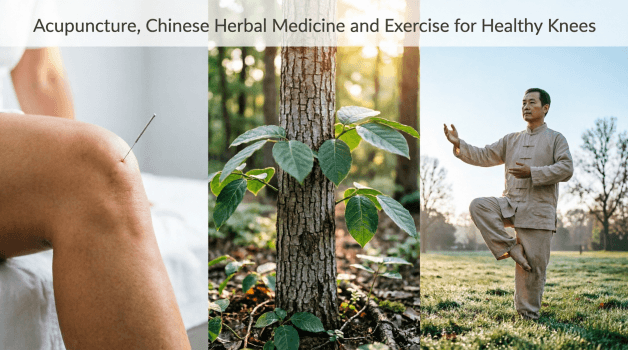
Our knees are among the hardest working joints in the body. Every step we take places forces through the knee that can exceed our body weight, and over the years these loads add up. It is therefore not surprising that knee discomfort becomes increasingly common with age, particularly in people who have had physically demanding jobs, sporting injuries, or simply the normal wear and tear of everyday life.
The encouraging news is that looking after your knees today can pay dividends for years to come.
Exercise: One of the Best Investments for Your Knees
Research consistently shows that keeping the muscles around the knee strong helps support the joint, improves stability and balance, and can reduce stress on the knee during everyday activities.
The most important muscle groups include:
- Quadriceps (front of the thigh)
- Hamstrings (back of the thigh)
- Gluteal muscles (hips and buttocks)
- Calf muscles
Rather than complicated gym programmes, regular, gentle movement performed several times each week is often the key.
Traditional Chinese Exercise
As both an acupuncturist and long-time student of wing chun, I particularly enjoy exercises that develop strength, balance and body awareness together.
Examples include:
- Horse Stance (Ma Bu) – develops strength through the thighs and hips while improving lower limb stability.
- Wing Chun Goat Stance (Yee Jee Kim Yeung Ma) – strengthens the legs while encouraging correct alignment and balance.
- Kung Fu stretching exercises – help maintain flexibility through the hips, knees and ankles.
- Qi Gong – slow, controlled movements that improve balance, coordination and body awareness. In particular, one legged qi gong postures help tremendously.
These traditional exercises emphasise quality of movement rather than heavy loading, making them suitable for many people when performed correctly.
How Acupuncture May Help
Acupuncture has been used for knee conditions in Chinese medicine for many centuries.
Modern treatment usually aims to improve movement, reduce pain and support normal function as part of an overall management plan that may also include appropriate exercise and, where indicated, medical care.
One feature of Master Tung Acupuncture, a style I use in the clinic, is its frequent use of distal acupuncture. Rather than always placing needles directly around the painful knee, treatment may involve acupuncture points on the opposite leg, or even specific points on the fingers or hand, depending on the individual’s presentation. This approach is a distinctive feature of the Tung acupuncture system.
In New Zealand, ACC provides cover for acupuncture treatment for many accepted injury claims when treatment is provided by an ACC, if the acupuncturist is registered with the Chinese Medicine Council of New Zealand.
Chinese Herbal Medicine
Chinese herbal medicine also has a long history of traditional use for musculoskeletal conditions. Herbal prescriptions are individually tailored after a traditional Chinese medicine assessment and may differ considerably from one person to another.
Examples of herbs traditionally used include:
Du Huo (Angelica pubescens root)
Traditionally used to dispel Wind-Damp, particularly when pain affects the lower back, hips and knees. It is well known from the classical formula Du Huo Ji Sheng Tang, first recorded in the 7th century text Bei Ji Qian Jin Yao Fang (“Essential Prescriptions Worth a Thousand Gold Pieces”) by Sun Simiao.
Niu Xi (Achyranthes bidentata root)
Traditionally said to strengthen the sinews and bones while promoting circulation. It is frequently included in classical formulas for chronic knee discomfort and weakness affecting the lower limbs.
Du Zhong (Eucommia ulmoides bark)
Traditionally used to strengthen the Liver and Kidney systems, nourish the sinews and bones, and support the lower back and knees. Its use for weakness of the lower back and knees is described in classical Chinese materia medica texts including the Ben Cao Gang Mu (Compendium of Materia Medica), compiled by Li Shizhen during the Ming Dynasty (16th century).
These descriptions reflect the traditional use of these herbs within Chinese medicine and should not be interpreted as claims that they are proven treatments for any particular medical condition.
A Combined Approach
In my experience, the best outcomes often come from combining several approaches:
- Individualised acupuncture treatment
- Appropriate Chinese herbal medicine where indicated
- Self care and home treatment using moxibustion and the rubbing in of Chinese herbal liniments.
- Progressive strengthening exercises
- Traditional Chinese movement practices such as Qi Gong or martial arts stances
- Lifestyle advice appropriate to the individual
Every knee is different. A sporting injury, osteoarthritis, tendon irritation or referred pain from the hip may each require a different treatment strategy.
If you are experiencing persistent knee pain, an assessment can help determine the most appropriate approach and whether acupuncture, Chinese herbal medicine, exercise, or referral for further medical investigation may be appropriate.
Compliance Note (New Zealand)
👤 About Heiko Lade Heiko Lade is a New Zealand–registered Chinese Medicine Practitioner with over 40 years of clinical experience. He has lectured in acupuncture and Chinese herbal medicine in both New Zealand and Australia, and continues to mentor and supervise students in his Hastings clinic.
Disclaimer: The information provided on this website is for educational purposes only and is not intended as a substitute for professional medical advice, diagnosis, or treatment. Individual responses to Chinese medicine can vary. Acupuncture and herbal prescriptions are tailored to the individual and should be taken under the guidance of a registered Chinese medicine practitioner. No specific outcomes are guaranteed, and any discussion of treatment response reflects general clinical experience only.
